
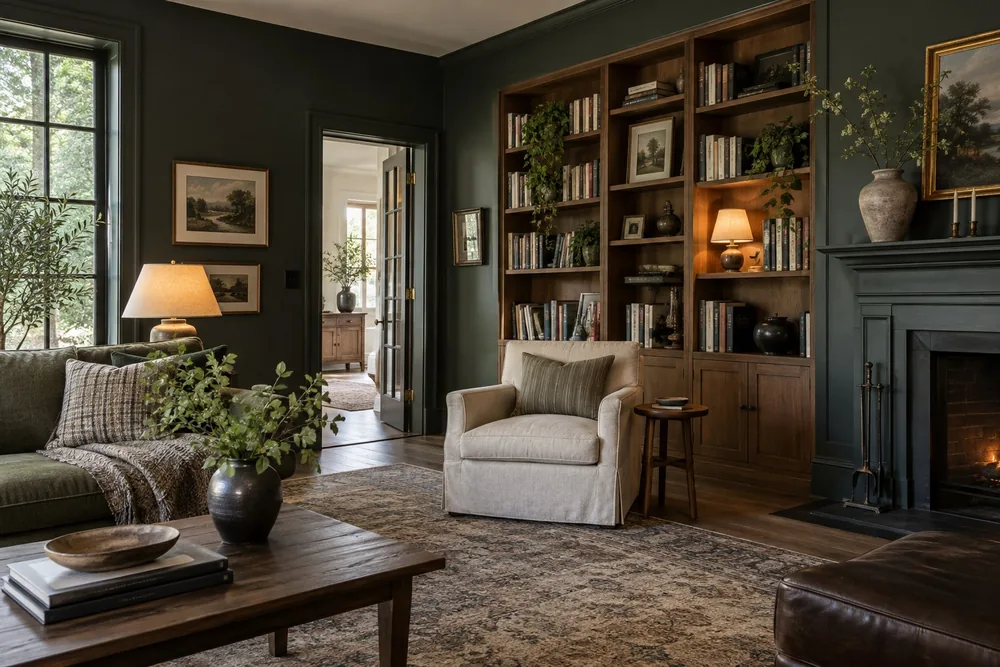
What Black Magic SW-6991 actually brings to the palette
Black Magic is a very dark black with a slight warm influence. The Black Magic SW-6991 manufacturer reference supplies the color identity and published specifications.
Black Magic and Tricorn Black share the same LRV, so a claimed brightness advantage would be unsupported.
Use Sherwin-Williams and the complete code SW-6991 when ordering a sample. The working question is a warm black comparison at equal reflectance. A broad family name cannot settle the relationship with warm white plaster and brass.
Plan how much of the room should carry Black Magic with paintcolorvisualizer.com, keeping warm white plaster and brass visible in the scene. Compare the main wall, trim and cabinet areas before buying samples, and use the physical boards to approve the color.
Digital reference · LRV 3
Digital reference · LRV 3
Digital reference · LRV 3
Black Magic, Tricorn Black or Caviar?
Black Magic and Tricorn Black both have a published LRV of 3. That equality describes reflectance, not matching colorants or identical undertones.
Sherwin-Williams Caviar SW-6990 provides another reference at LRV 3. These are separate colors to compare, not promised formula matches. Keep the samples at equal size and orientation, then cover each alternative in turn so the preferred paint is also judged alone.
To clarify the difference between Black Magic and Tricorn Black, use compare while keeping the same room and surrounding materials in view. Follow the digital comparison with two labeled physical boards under identical light.
| Color | Brand / code | LRV |
|---|---|---|
| Black Magic | Sherwin-Williams SW-6991 | 3 |
| Tricorn Black | Sherwin-Williams SW-6258 | 3 |
| Caviar | Sherwin-Williams SW-6990 | 3 |
A warm black comparison at equal reflectance
Black Magic is a very dark black with a slight warm influence. The useful starting point for this review is warm white plaster and brass. This is a proposal for assessing the color, not a claim that it has been tested in your home.
Test it directly against Tricorn Black; equal LRV does not mean an identical color impression.
Use the lighting reference on Paintuma Black Magic SW-6991 to plan which appearances to check, then move the Black Magic sample through your own daylight and evening conditions. The aim is to evaluate a warm black comparison at equal reflectance, not to treat a rendered scene as a measured result.
How much separation should Black Magic create?
Black Magic and Tricorn Black both have a published LRV of 3. That equality describes reflectance, not matching colorants or identical undertones. The values provide a starting comparison, not a prediction of how bright the finished room will feel.
For warm white plaster and brass, decide whether the painted surface should form a clear boundary or a softer transition. View the trial from the entrance as well as close up. A subtle difference between samples can be worthwhile if it makes the permanent finishes sit together more comfortably.
A palette with Black Magic in a defined role
The manufacturer's coordinating suggestions include Snowbound SW7004, Lemon Meringue SW7561 and Anjou Pear SW6381. These are separate named colors to sample, not interchangeable formulas. For the material direction considered here—warm white plaster and brass—choose which surface each candidate would occupy before deciding that the whole set belongs in the room.
Choose the main painted surface before assigning trim and accent colors. In the warm white plaster and brass direction, let the largest fixed surface set the constraint. Compare unequal sample areas that reflect the intended room, rather than assuming three equal paint chips describe the finished balance.
LRV 3: the light question for Black Magic
At 3, Black Magic belongs to the very deep end of this shortlist. On a wall, plan for substantial shadow and test whether the intended hue is still distinguishable from a near-black impression. Pale neighboring surfaces are a design option, not a way of changing the paint's reflectance.
Check the window wall, a shaded return and the room under its usual lamps. Keep warm white plaster and brass together as you move the sample. Record which relationship changes; a different phone exposure is not evidence that the paint will behave differently.
Where to test Black Magic before repeating it
Start with the room where warm white plaster and brass is most important to the design. On cabinets, place a board under the countertop overhang; in a bedroom, inspect it with the bedside lamps; in a living room, read the wall from the entrance with the main upholstery visible.
At 3, Black Magic belongs to the very deep end of this shortlist. On a wall, plan for substantial shadow and test whether the intended hue is still distinguishable from a near-black impression. Pale neighboring surfaces are a design option, not a way of changing the paint's reflectance. If the principal room passes, repeat the check at connecting doorways before adopting one color throughout the house. Different floors and factory whites may require a related palette rather than identical walls.
Keep the color identity on the specification
Black Magic is a very dark black with a slight warm influence.
Record Sherwin-Williams, Black Magic and SW-6991 together. A shared name, similar screen values or the same LRV does not establish an interchangeable paint formula. Approve the authentic sample and the intended coating rather than relying on shorthand on the purchase list.
The final sample decision for Black Magic
Test it directly against Tricorn Black; equal LRV does not mean an identical color impression.
Label the board Sherwin-Williams Black Magic SW-6991, apply and dry it according to the product directions, and approve it in the intended finish. Keep the failed condition in your notes as well as the successful view. Color choice does not specify cabinet preparation, bathroom suitability or an exterior coating system. The paint color visualizer roundup compares tools for planning the painted areas before the physical trial.
Sources & notes
This guide reviews published color information and proposes practical sample checks. It does not claim first-hand paint testing or customer-review scores. Sherwin-Williams does not sponsor or endorse this site. Product names and trademarks belong to their respective owners. Confirm the color in a physical sample and select the coating for the actual surface and finish.